Newly Diagnosed
We want to extend a warm welcome to you, the newest member of our HNRNP-Related Neurodevelopmental Disorders (HNRNP-RNDDs) family. We know some of the feelings you may be going through and are here to guide and support you through this journey.
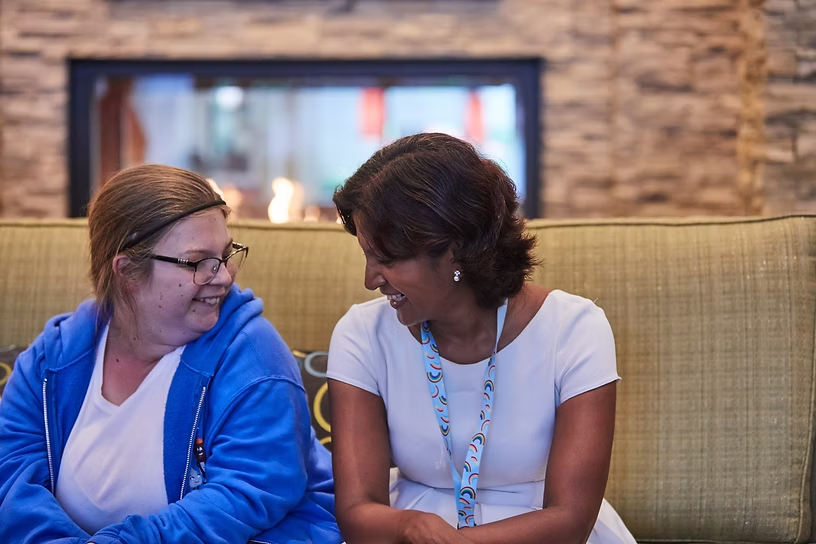
Mary, who has HNRNPU-NDD, chatting with Dr. Meena Balasubramanian, a clinical lecturer and geneticist from University of Sheffield, one HNRNP Family Foundation research collaborator
Your First Steps
A diagnosis can feel overwhelming. Here's where to begin.
Learn the Basics
Start with our Learning Center to understand what HNRNP disorders are and how they affect development. Take it at your own pace.
Visit Learning CenterFind Your Condition
Each HNRNP disorder has unique features. Find your specific condition to access tailored information and resources.
Explore DisordersConnect With Families
Join our community of families who understand what you're going through. Share experiences, ask questions, and find support.
Join Our CommunityWhat are HNRNP-RNDDs?
HNRNP-Related Neurodevelopmental Disorders are rare genetic conditions that affect development from birth or infancy. They're caused by changes in genes that help the brain develop and function properly.
Key Facts
- Extremely rareOnly ~700 documented cases exist worldwide
- De novo originMost cases are new genetic changes, not inherited from parents
- Variable presentationEach child is unique—symptoms and severity vary widely
- Active researchScientists are working to understand and develop treatments
Common Questions
Is there a cure?
Currently, there is no cure. However, many therapies can help—including physical, speech, and occupational therapy. Medications can help manage specific symptoms like seizures. Research into treatments is ongoing.
What caused this?
In most cases, the genetic change happened spontaneously (called "de novo"). It's not caused by anything parents did or didn't do during pregnancy.
Find Your Condition
Each disorder has its own page with specific information, research updates, and resources.
HNRNPC-RNDD
Gene: HNRNPC
HNRNPC-RNDD was first described in 2023. While other members of the HNRNP gene family were already linked to neurodevelo...
Learn More →PTBP1-RNDD
Gene: PTBP1
PTBP-related neurodevelopmental disorder (also called PTBP1-RNDD) is a rare genetic condition caused by changes in the P...
Learn More →HNRNPG-RNDD
Gene: RBMX
Two disorders have been described related to changes in the RBMX gene: Shashi-type intellectual disability and Gustavson...
Learn More →HNRNPH1-RNDD
Gene: HNRNPH1
HNRNPH1-RNDD was first described in 2018. While at first considered a type of Bain type intellectual disability (due to ...
Learn More →HNRNPH2-RNDD
Gene: HNRNPH2
HNRNPH2-RNDD was first described in 2016. Variants in HNRNPH2 on the X chromosome are associated with a neurodevelopment...
Learn More →Au-Kline Syndrome
Gene: HNRNPK
HNRNPK-related neurodevelopmental disorder, also called Au-Kline syndrome (AKS), is a rare genetic condition that affect...
Learn More →HNRNPR-RNDD
Gene: HNRNPR
HNRNPR-RNDD is a rare genetic condition that affects how a child grows, learns, and develops. Most individuals with this...
Learn More →HNRNPU-RNDD
Gene: HNRNPU
HNRNPU-related neurodevelopmental disorder is a rare genetic condition that affects how a child grows, learns, and devel...
Learn More →SYNCRIP-RNDD
Gene: SYNCRIP
SYNCRIP-related neurodevelopmental disorder (also called HNRNPQ-RNDD) is a rare genetic condition caused by changes in t...
Learn More →Connect With Us
You don't have to navigate this journey alone
Facebook Community
Join our private Facebook group to connect with other families, share experiences, and get support from people who truly understand.
Join the groupReach Out Directly
Have questions or need guidance? Our team of parents and advisors is here to help. Don't hesitate to reach out.
Contact usResearch Updates
Stay informed about the latest research, clinical trials, and scientific breakthroughs in HNRNP disorders.
View researchThere Is Hope
While a diagnosis can feel overwhelming, remember that your child is still the same wonderful person they were before. With the right support, therapies, and community, many children with HNRNP disorders thrive and bring immense joy to their families.
Our foundation exists because families like yours came together. We're dedicated to funding research, educating providers, and building a supportive community—and now you're part of it.