HNRNPK-Related Neurodevelopmental Disorder (Au-Kline Syndrome)
HNRNPK-related neurodevelopmental disorder, also called Au-Kline syndrome (AKS), is a rare genetic condition that affects how a child grows, learns, and develops. Children with this condition almost always have low muscle tone, developmental delays, and learning differences. Many also share a recognizable facial appearance, but it can be very subtle in some children.
An HNRNPK-specific DNA methylation signature makes sense of missense variants and expands the phenotypic spectrum of Au-Kline syndrome
The American Journal of Human Genetics(2022)
View PDFPhenotypic spectrum of Au-Kline syndrome: a report of six new cases and review of the literature
European Journal of Human Genetics(2018)
View PDFGeneMatcher aids in the identification of a new malformation syndrome with intellectual disability, unique facial dysmorphisms, and skeletal and connective tissue abnormalities caused by de novo variants in HNRNPK
Human Mutation(2015)
View PDFThe Gene
HNRNPK is a gene that acts like a master helper for many other genes, especially during early brain and body development. Everyone has two copies of the HNRNPK gene, one from each parent. In Au-Kline syndrome, one copy has a change (variant) that affects how it works. Because HNRNPK helps regulate many other genes, one change can have ripple effects across different organs and systems in the body.
Why It Matters for the Brain
The HNRNPK gene plays an important role in controlling how other genes are turned on and off, especially in the brain and during early growth. When HNRNPK isn't working as expected, it can affect multiple body systems at the same time. Doctors can also use a special lab test that looks at DNA methylation—a type of "chemical tagging" on DNA—to help confirm whether a specific HNRNPK variant is truly causing Au-Kline syndrome.
Everyone has two copies of the HNRNPK gene, one from each parent. In Au-Kline syndrome, one copy has a change (variant) that affects how it works. In many children, this change happens for the first time ("de novo"), meaning it was not present in either parent's DNA. Doctors may also use DNA methylation signature testing—chemical markers on the DNA—to help confirm whether an HNRNPK variant is truly causing Au-Kline syndrome.
Variant types observed:
- Loss-of-function variants – where the gene's instructions are "broken" or cut short. These often lead to more medical complications, especially heart and kidney issues.
- Missense variants – where a single "letter" in the DNA code is changed, altering how the protein works. These may result in milder medical involvement.
- Deletions and frameshift variants
Master Gene Regulator
HNRNPK acts as a master helper for many other genes, controlling how they are turned on and off. This is especially important during early brain and body development, where precise gene regulation is essential.
DNA Methylation Signature
Au-Kline syndrome has a distinct DNA methylation signature—a pattern of chemical markers on the DNA. This "episignature" can be detected through blood testing and helps confirm diagnosis, especially when genetic changes are unclear or features are mild.
Multi-System Effects
Because HNRNPK helps regulate so many other genes, a single change in HNRNPK can have ripple effects across different organs and systems including the heart, kidneys, brain, bones, and muscles.
Genotype-Phenotype Correlation
Research shows that children with loss-of-function variants (where the gene's instructions are "broken" or cut short) often have more medical complications, especially heart and kidney issues. Those with missense variants (where a single DNA "letter" is changed) may have fewer malformations and milder medical involvement.
Developmental Delay/Intellectual Disability
~95%Almost all children with Au-Kline syndrome have developmental and learning differences, but abilities vary widely.
- Mild to severe global developmental delay and intellectual disability are very common
- Delays in speech, motor skills, and learning. Some individuals are nonverbal and/or nonambulatory.
- Many children make progress over time with therapy
- Some learn to walk and talk later
Hypotonia
~80%Low muscle tone (hypotonia) is present in almost all individuals. Babies may feel "floppy" and be slow to hold up their head, roll, sit, or walk.
- May feel floppy as babies
- Slow to reach motor milestones
- Joint hypermobility (very flexible joints) often accompanies hypotonia
Facial Features
~80%Doctors have identified several facial traits that often appear together in Au-Kline syndrome. These can be very obvious in some children and very subtle in others.
- Longer face
- Eyes that appear more open or long (long palpebral fissures)
- Shallow eye sockets
- Ptosis
- Broad nasal bridge
- Hypoplastic nostrils (alae)
- Upturned nostrils (anteverted nares)
- Exaggerated Cupid's bow (wide "M" shaped upper lip)
- Large or deeply grooved tongue, sometimes appearing split or bifid
- Downturned “beaked” mouth
- Ridged metopic suture
- Abnormal ears
- Teeth anomalies
- Cleft Lip/Palate
Heart and Blood Vessels
~70%Many children have congenital heart defects (heart differences present at birth). Heart monitoring is important.
- Congenital heart defects such as small holes in the heart
- More complex cardiac issues in some individuals
- Aortic dilation (widened main blood vessel from heart) in some cases
- Regular cardiac monitoring recommended
Kidney and Urinary System
~65%Kidney changes are common in individuals with Au-Kline syndrome.
- Hydronephrosis (kidneys appear swollen due to urine not draining well)
- Other structural kidney differences
- Cryptorchidism (undescended testicles) common in boys, may require surgery
Feeding, and Digestive Issues
~50%Feeding issues, reflux, and constipation are frequent, especially in infancy and early childhood.
- Feeding difficulties
- Gastroesophageal reflux
- Constipation
- Some children may need feeding tube support
Bones, Spine, and Joints
~70%Skeletal and joint differences are observed in many individuals with Au-Kline syndrome.
- Scoliosis (curvature of the spine)
- Vertebral segmentation anomalies (spine bones not formed typically)
- Joint hypermobility (very flexible joints)
- Craniosynostosis (early skull bone fusion) in some children
- Hip Dysplasia
- Hand and feet differences such as clubbed feet, pes planus, and clinodactyly
- Other physical anomalies include widely spaced and/or inverted nipples and a sacral dimple
Behavioral Differences
40%While less prevalent than some of the other HNRNP-RNDDs, behavioral differences have been observed in Au-Kline syndrome.
- Autism spectrum disorder (ASD)
- ADHD
- Anxiety
Nervous System & Brain
~50%Brain imaging can show various structural differences. Many children have reduced reflexes and symptoms of autonomic dysfunction.
- Differences in myelination (coating around nerves)
- Corpus callosum differences
- Reduced reflexes
- High pain tolerance
- Autonomic dysfunction (sweating, temperature regulation, gut motility issues)
- Seizures (less common but have been reported)
Eye and Vision
~55%Eye differences including structural and vision problems have been observed.
- Optic nerve abnormalities
- Strabismus
- Abnormality of eye movement
Receiving an Au-Kline syndrome diagnosis can bring a mix of emotions—relief at having answers, along with worry about the future. You are not alone. Even though AKS can sound overwhelming, many children make progress over time with early therapies, medical care, and school support.
- The condition is now well-recognized with a clear genetic explanation.
- DNA methylation testing can help confirm the diagnosis, especially in children with milder features.
- Children with loss-of-function variants often have more medical complications, while those with missense variants may have milder overall medical involvement—but both groups benefit greatly from early and ongoing support.
- Families often work with a team that may include genetics, cardiology, neurology, kidney specialists, therapists, and educators.
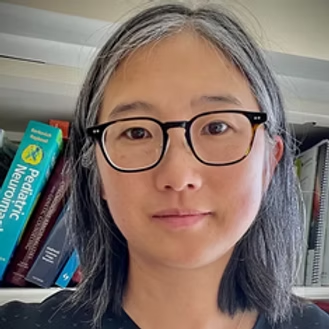
Billie (Ping-Yee) Au, MD, PhD
Clinical Assistant Professor
University of Calgary, Calgary, Canada
Dr. Billie Au's research has focused on identifying the underlying genetic etiology for novel syndromes, and the characterization of these syndromes. She is particularly interested in dysmorphic syndromes that involve intellectual disability, autism, epilepsy and other abnormal neurological phenotypes. She is interested in “reverse phenotyping,” i.e. how understanding disease-related genes within the context of their signaling and regulatory networks can inform our knowledge of clinical phenotype and subsequent management and therapy. She is also interested in how knowledge of genetic etiology can be used to improve management of patients in new ways, such as through identification of potential therapeutic targets in dysregulated cellular pathways. Her research applies new genomic technologies such as whole exome sequencing, but will hopefully also involve whole genome and transcriptome approaches in the future.
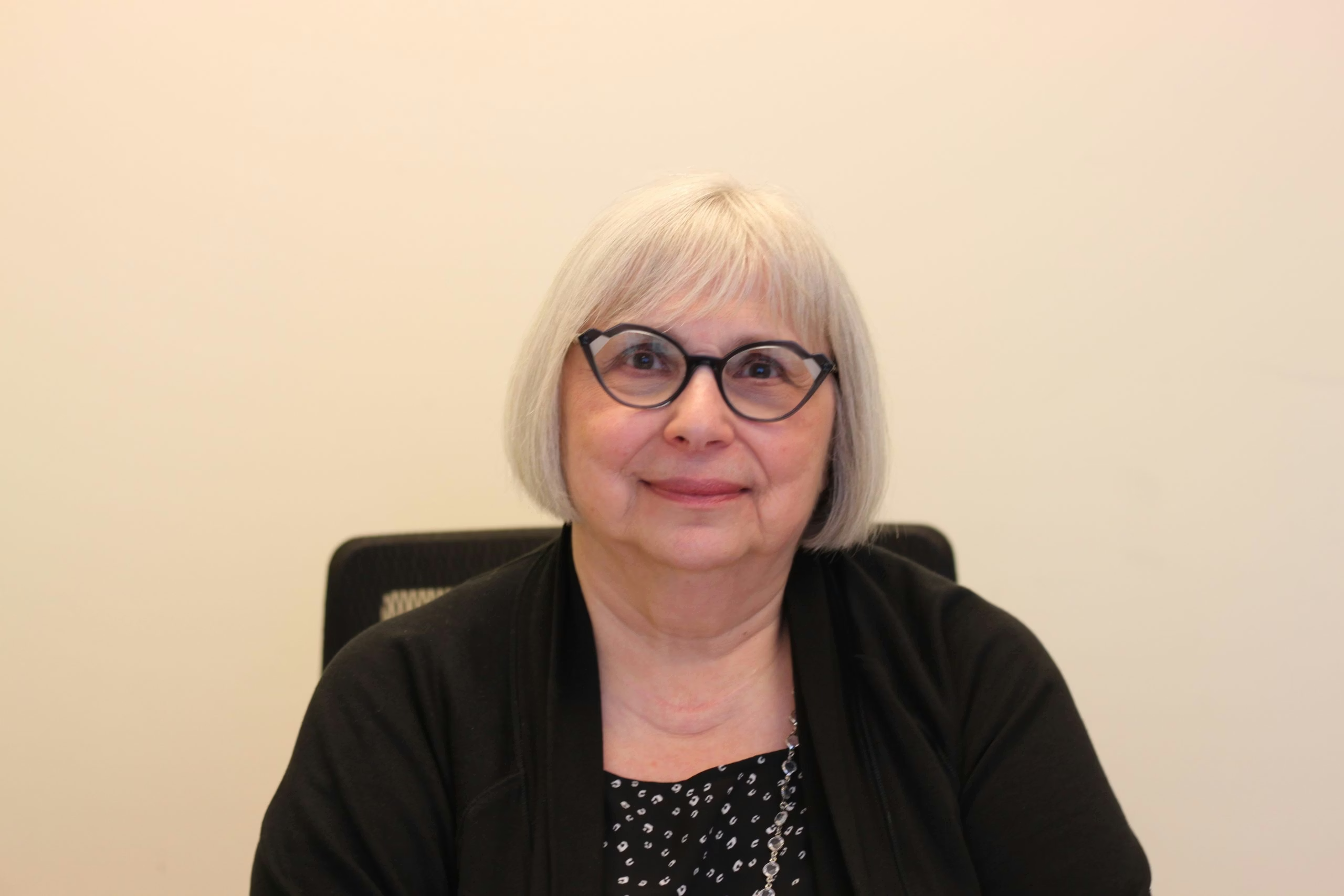
Rosanna Weksberg
Clinical Geneticist, Division of Clinical and Metabolic Genetics
University of Toronto, Toronto, Canada
Dr. Rosanna Weksberg is a Professor of Paediatrics and Medical Genetics at The Hospital for Sick Children (SickKids) and University of Toronto. Dr. Weksberg’s current research focuses on the epigenetic basis of normal human development and the identification of epigenetic alterations associated with human disease, especially for growth and neurodevelopmental disorders. Dr. Weksberg is an Associate Editor for the American Journal of Medical Genetics and Frontiers in Genetics.

Micheil Innes, MD
Professor, Department of Medical Genetics
Cumming School of Medicine, University of Calgary, Calgary, Canada
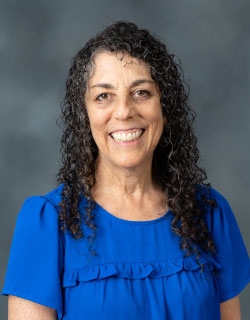
Antonie Kline, MD
Director of Clinical Genetics, The Randolph B. Capone Cleft Lip and Palate Program
Cumming School of Medicine, University of Calgary, Calgary, Canada
Dr. Kline received her medical degree from Jefferson Medical College, Philadelphia, PA, her postdoctoral training in medical genetics at Jefferson Medical College, Philadelphia, PA, and her clinical cytogenetics training at the Kennedy Krieger Institute of the Johns Hopkins University School of Medicine, Baltimore, MD. She is board-certified in clinical genetics, clinical cytogenetics, and clinical molecular genetics. She is also a Fellow of the American Academy of Pediatrics and a Founding Fellow of the American College of Medical Genetics. Dr. Kline is the medical director of the Cornelia de Lange Syndrome Foundation and a member of the professional advisory board of the 5p- Society. Her areas of expertise include evaluation of multiple birth defects and/or developmental issues, as well as correlation and interpretation of cytogenetic changes in a clinical setting.
Join Our Research
We are running a Natural History Study for Au-Kline Syndrome at the HNRNP Family Foundation. Your participation helps advance research and treatment development.
HNRNP Caregiver Connect
Connect with caregivers across all HNRNP disorders
Publication List
View the latest research publications
Join our Natural History Study
Participate in research to help advance understanding
GeneReviews Entry
Comprehensive medical resource for HNRNPK-Related Disorder
Au-Kline Syndrome Facebook Group
Connect with other families affected by Au-Kline disorders
Want to learn more about other HNRNP-RNDDs?
Explore our comprehensive resources on all HNRNP-Related Neurodevelopmental Disorders.
View All Disorders